Short answer
Ice on an air conditioner's refrigerant lines or indoor coil comes from too little airflow (a dirty filter, closed vents or a failing blower) or low refrigerant from a leak. Turn cooling off, run the fan to thaw it, fix the airflow, and call if it refreezes.
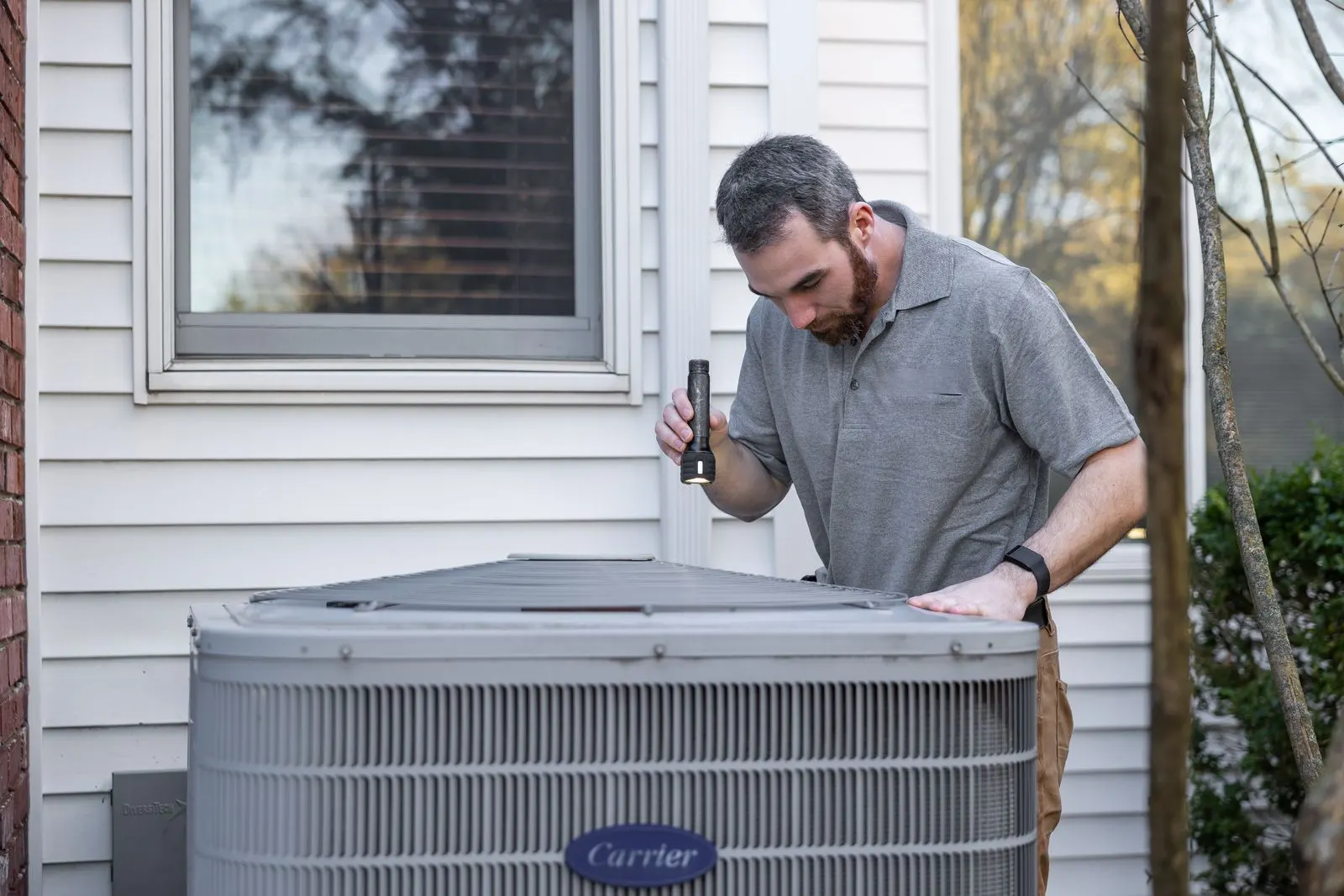
How to thaw it
Thawing takes two to four hours with the fan running.
- Set the thermostat to Off and the fan to On.
- Place towels near the furnace; a lot of water drains as the ice melts.
- Replace the filter while you wait.
- Don't chip at the ice. The coil fins are easily damaged.
Airflow causes
A clogged filter is the most common cause. Closing too many vents to push air upstairs, crushed return ducts and a blower motor that's slowing down all do the same thing. Less air across the coil lets it drop below freezing.
Refrigerant causes
Low refrigerant lowers coil pressure and temperature, so the coil freezes even with good airflow. Refrigerant doesn't get used up, so low charge means a leak. A technician finds and repairs the leak before recharging, especially on older R-22 systems where refrigerant is expensive.
Cool night operation
Running the AC on a cool night in late spring or early fall, with outdoor temperatures in the 50s, can also ice some systems. If it only happens then, raise the setpoint or open windows.
When to call a technician
- The coil refreezes within a day of thawing with a clean filter.
- You see oily spots on refrigerant lines or fittings.
- The blower sounds weak or makes noise.
What the technician does: see ac repair.
Common questions
Will a frozen AC damage the compressor?
It can, if liquid refrigerant returns to the compressor. Turning cooling off until it thaws protects it.
Editorial note: this guide is general information for Kansas City-area homeowners, not a diagnosis. Conditions vary by home, so a licensed HVAC technician should confirm the cause before any repair.